


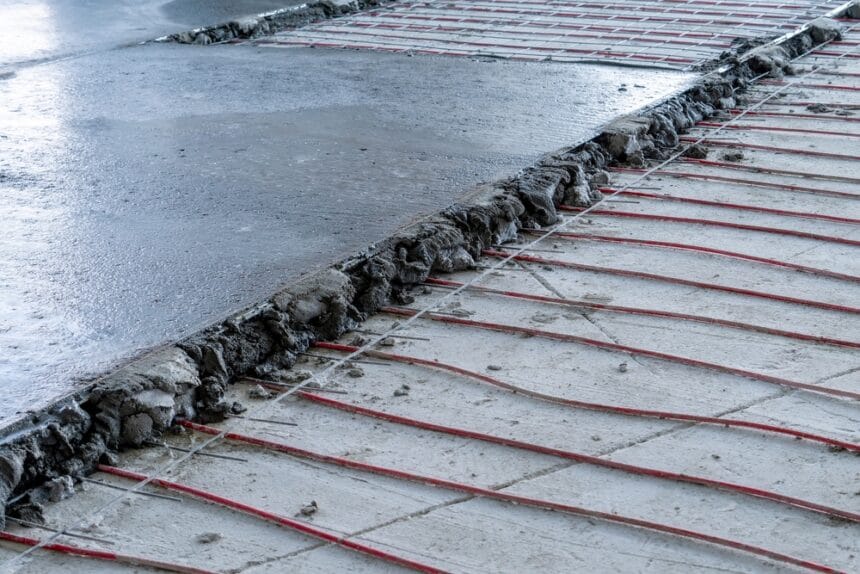
A heated driveway can make winter maintenance easier by helping melt snow and ice before they accumulate. This can be especially appealing in areas where freezing temperatures create slippery surfaces and require repeated snow removal. But what if you already have a concrete driveway? Can a heating system be installed underneath the existing slabs?
In most cases, retrofitting a heated driveway under existing concrete is not practical without removing or significantly altering the concrete. The heating system needs to be positioned beneath or within the slab to transfer heat effectively. Understanding the available options can help you decide whether retrofitting makes sense for your property.
Why Existing Concrete Creates a Challenge
Electric heating cables and hydronic systems are generally installed below the finished concrete surface. During new construction, the heating elements can be placed on the prepared base before concrete is poured.
With an existing driveway, the concrete is already in place. Installing a heating system underneath it would require access to the base. This typically means lifting or removing the slabs, which can involve substantial excavation and reconstruction.
A concrete contractor in Vaughan can inspect the existing driveway and determine whether its condition, thickness, drainage, and construction make any retrofit approach feasible.
Can Heating Elements Be Installed on Top?
Another option is placing heating cables or mats over the existing concrete and covering them with a new surface layer. However, this can raise the finished grade of the driveway and create issues around garage doors, steps, drainage, and property transitions.
The additional layer must also be designed to withstand vehicle loads and seasonal temperature changes. A professional assessment is important before choosing this approach.
When Replacement May Make More Sense
If the existing concrete is cracked, uneven, heavily deteriorated, or nearing the end of its service life, replacing the driveway may be more practical than attempting a retrofit.
During reconstruction, the heating system can be installed correctly before the new concrete is poured. This provides an opportunity to plan the heating layout, electrical connections or hydronic components, drainage, expansion joints, and slab thickness together.
For homeowners considering concrete driveways in Vaughan, adding a snow-melting system during the original installation may be easier and more cost-effective than modifying an existing driveway later.
Electric vs. Hydronic Systems
Electric systems use resistance heating cables or mats. They can be suitable for residential driveways and are generally simpler to install when the slab is being constructed.
Hydronic systems circulate heated fluid through tubing installed beneath the concrete. They can work well for larger areas but require additional equipment, including a heat source, pump, and controls.
Neither system is usually a simple surface-level upgrade for an existing concrete driveway. The appropriate option depends on the driveway size, available power, heating requirements, and project design.
Get the Existing Slab Assessed
Before making a decision, have the driveway inspected. A concrete contractor in Vaughan can assess whether the existing slab can be removed and reused, whether reconstruction is necessary, or whether another snow-management solution is more appropriate.
If replacement is recommended, discuss the heating system before construction begins. This allows the contractor to coordinate the base preparation, reinforcement, heating components, concrete placement, and finishing.
When planning new concrete driveways in Vaughan, thinking about snow melting during the design stage can help avoid expensive modifications later.
Plan a Driveway Built for Winter!
At Concrete One Ltd, thoughtful planning is an important part of creating durable concrete surfaces. If you are considering a new driveway or exploring options for an existing slab, our team can help assess your project and discuss practical solutions. Visit Concrete One Ltd to learn more and start planning your next concrete project.