


Your driveway does more than provide a place to park your vehicle. It contributes to your property’s appearance and needs to withstand changing weather, vehicle weight, and regular use. Two popular options are stamped concrete and interlocking pavers. Both can create an attractive and functional driveway, but they differ in installation, maintenance, appearance, and repair.
Understanding these differences can help you choose an option that fits your property and priorities.
What Is Stamped Concrete?
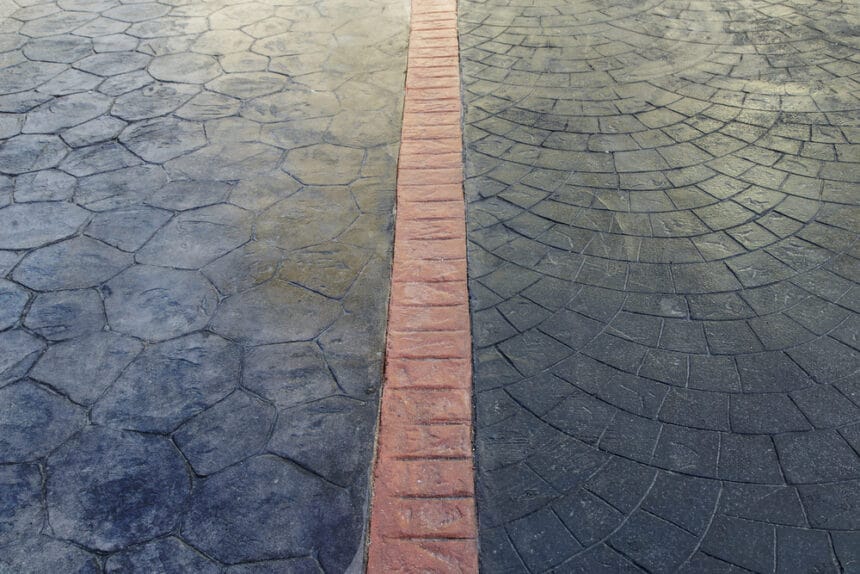
Stamped concrete is poured concrete that is textured and patterned before it fully sets. It can be designed to resemble materials such as stone, brick, or slate while maintaining the characteristics of a concrete surface.
One advantage is the range of available patterns and colours. Stamped concrete can create a continuous appearance across a driveway and may complement the architectural style of your home.
Because it is installed as a solid surface, proper preparation and installation are important. Drainage, base preparation, reinforcement, control joints, and finishing can all influence how the driveway performs over time.
What Are Interlocking Pavers?
Interlocking pavers are individual concrete or stone units installed over a prepared base. The pieces fit together to form the driveway surface.
One notable feature of pavers is their modular construction. If one section becomes damaged or stained, individual units can often be removed and replaced without disturbing the entire driveway.
Pavers are also available in various shapes, colours, textures, and patterns. This allows homeowners to create borders, geometric designs, or other visual details.
Comparing Durability And Maintenance
Both materials can perform well when properly installed and maintained. However, they respond differently to damage and seasonal conditions.
Stamped concrete can develop cracks over time due to ground movement, temperature changes, or other factors. Repairs may be more noticeable because matching an existing colour and pattern can be difficult.
With interlocking pavers, movement or settlement may occur if the underlying base is not properly prepared. Individual pavers can often be reset or replaced when localized problems develop.
Maintenance requirements also differ. Concrete may require periodic sealing depending on the finish and exposure. Pavers may require joint maintenance as sand between the units can shift or become displaced.
Which Option Handles Winter Conditions Better?
In climates with freezing temperatures and repeated freeze-thaw cycles, installation quality becomes especially important. Water management and a properly prepared base can influence how either driveway performs.
Interlocking pavers have some flexibility because their individual units can move slightly with the underlying surface. Stamped concrete forms a rigid slab, making proper construction and control joints important considerations.
A qualified concrete contractor in Vaughan can assess your property and discuss factors such as drainage, soil conditions, slope, and expected vehicle use before recommending a concrete driveway system.
Which One Should You Choose?
The right option depends on your priorities. Stamped concrete may appeal to homeowners who want a continuous surface with decorative patterns. Interlocking pavers may be more suitable for those who value modular repairs and extensive design flexibility.
Budget, maintenance expectations, property conditions, and long-term plans should all factor into the decision.
If you are comparing concrete driveways in Vaughan, consider the complete project rather than focusing only on the initial appearance. A properly designed and installed driveway can provide a practical surface while complementing the surrounding property.
Plan Your Driveway With Concrete One Ltd – Thoughtful Concrete Solutions For Your Property!
Concrete One Ltd provides concrete services for residential and commercial projects. If you are considering a new driveway, understanding your property’s layout, drainage, surface requirements, and design preferences can help guide the planning process. Our team can discuss your project requirements and the available concrete options for your property.